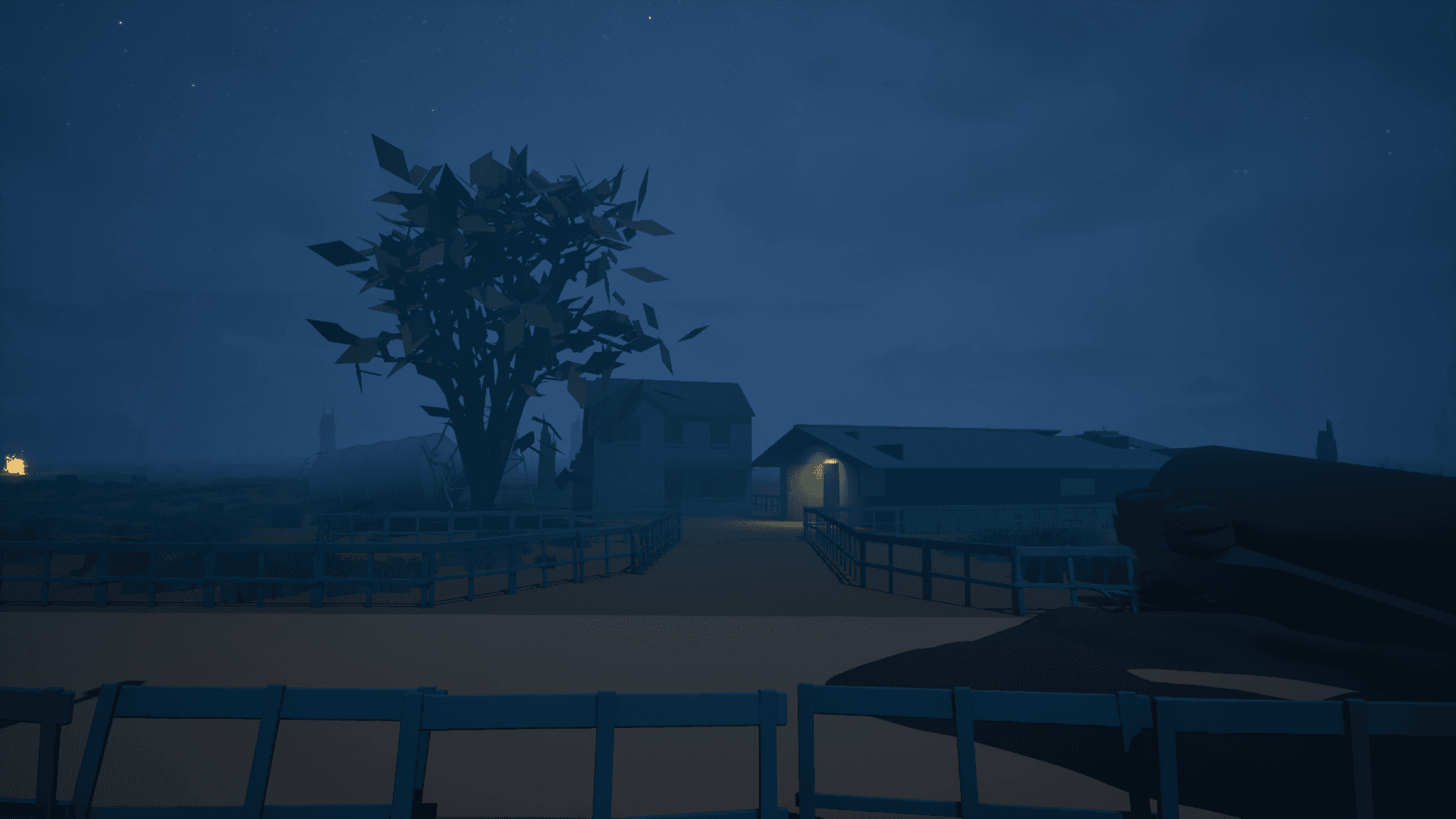
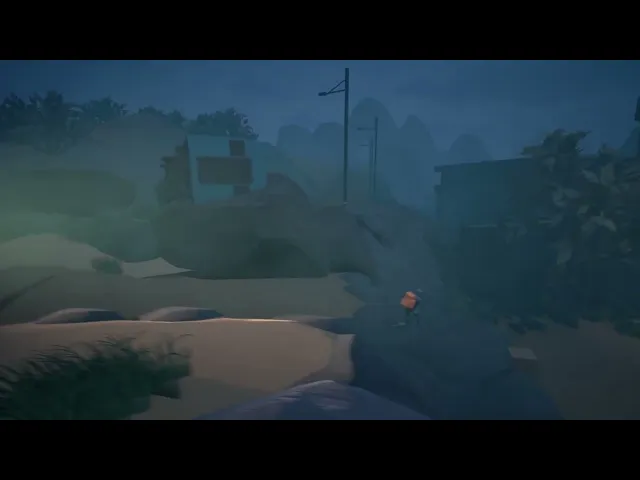
"Home"
Summary
You play as lost child, trying to get home.
To get there you must solve environmental puzzles and avoid the soldiers that kills everyone they can find.
With this level I wanted to play with dreadfulness and eerie feelings.
GOALS
Create a narrative side-scroller adventure
"Fixed" camera composition
Variation in tension
Environmental storytelling
Overview
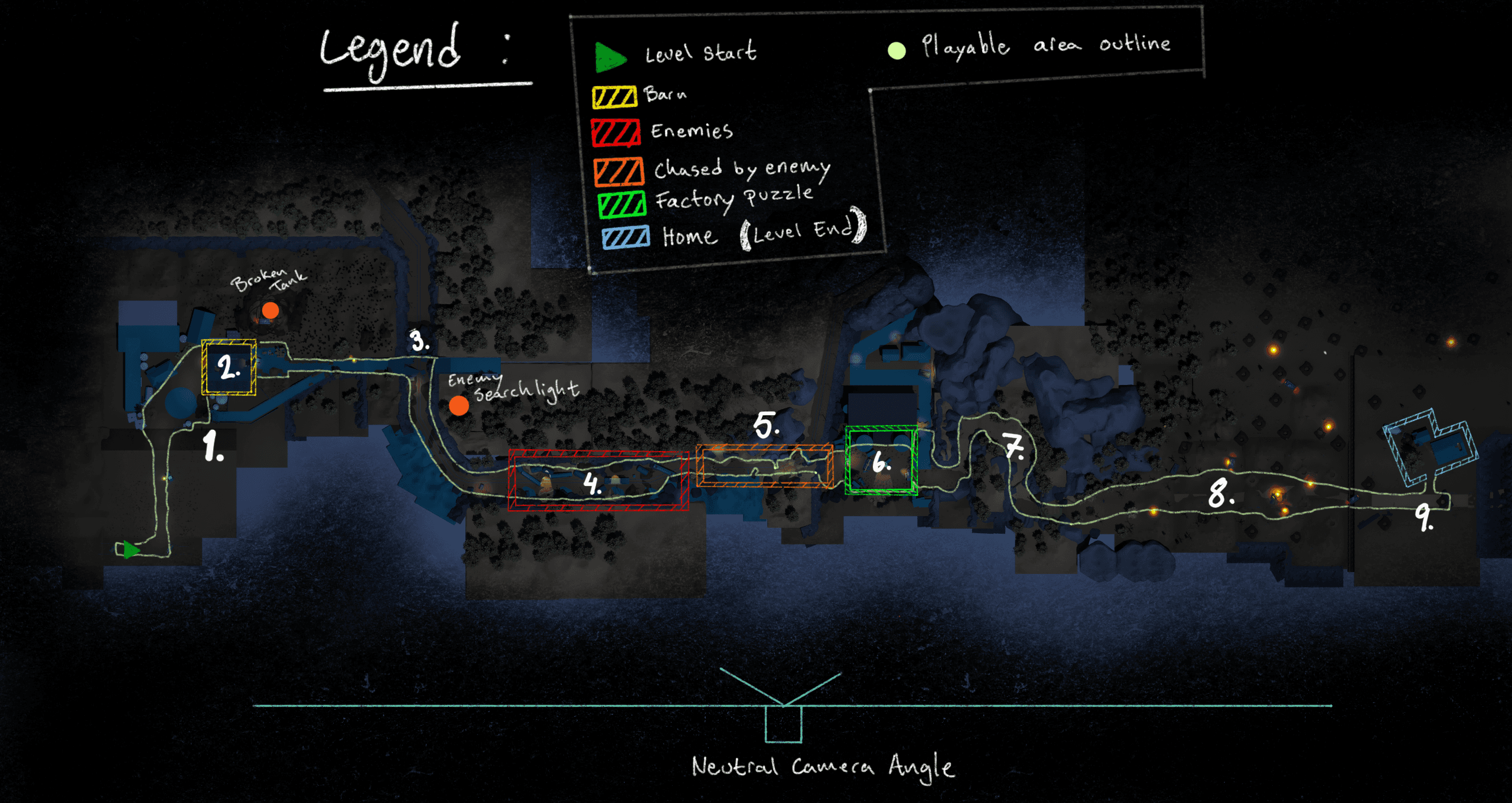
Level Beats
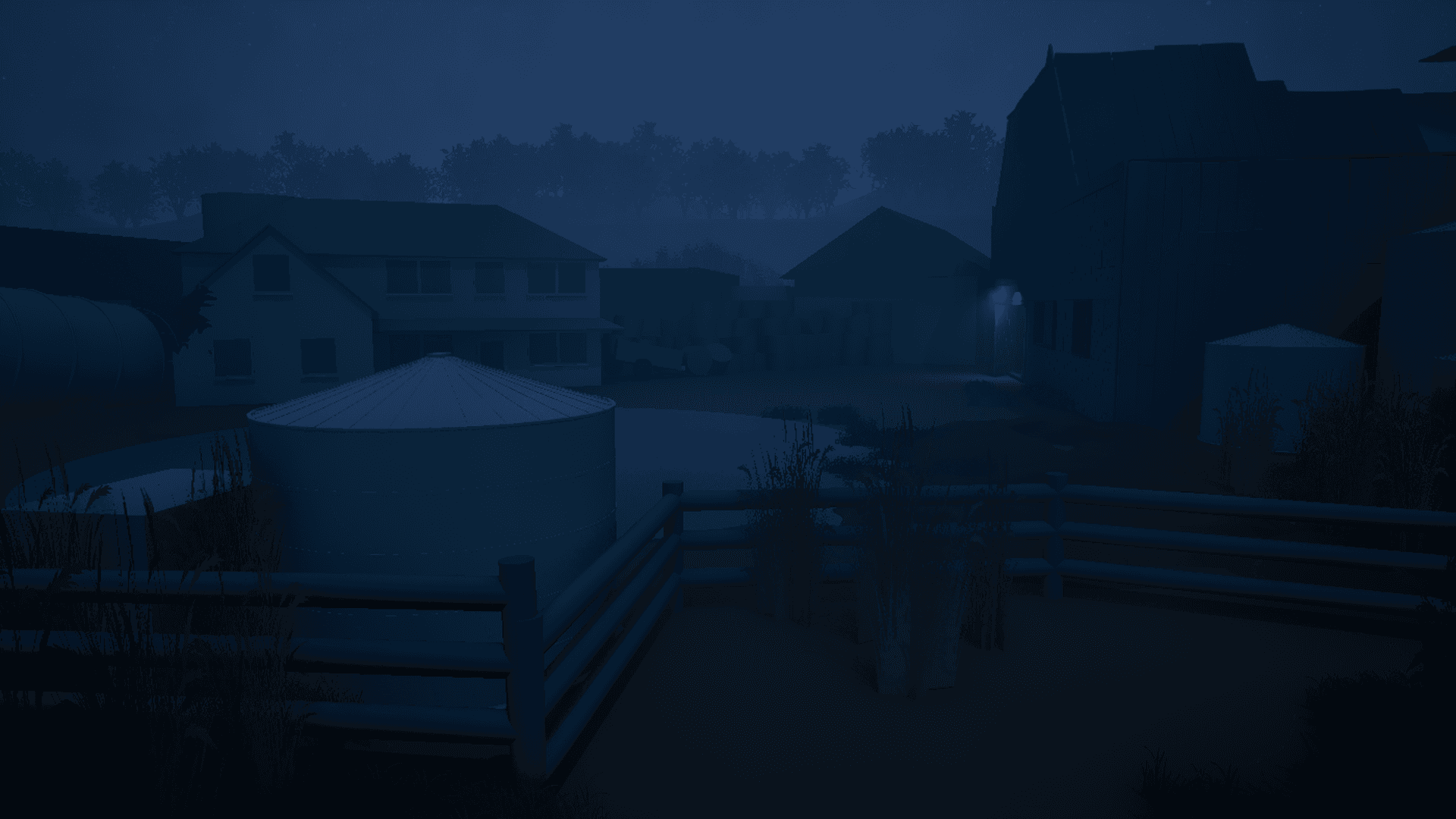
Farm
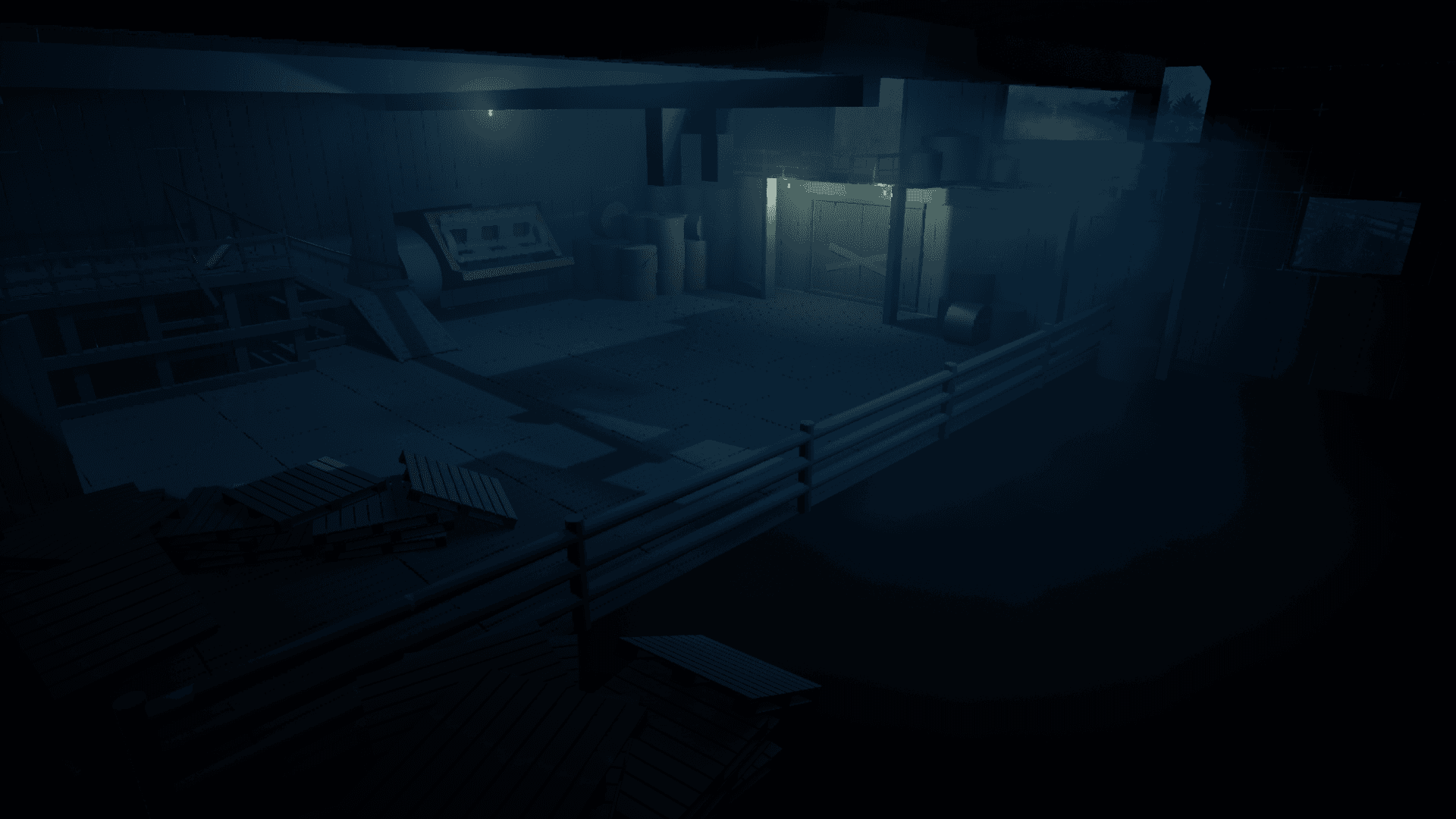
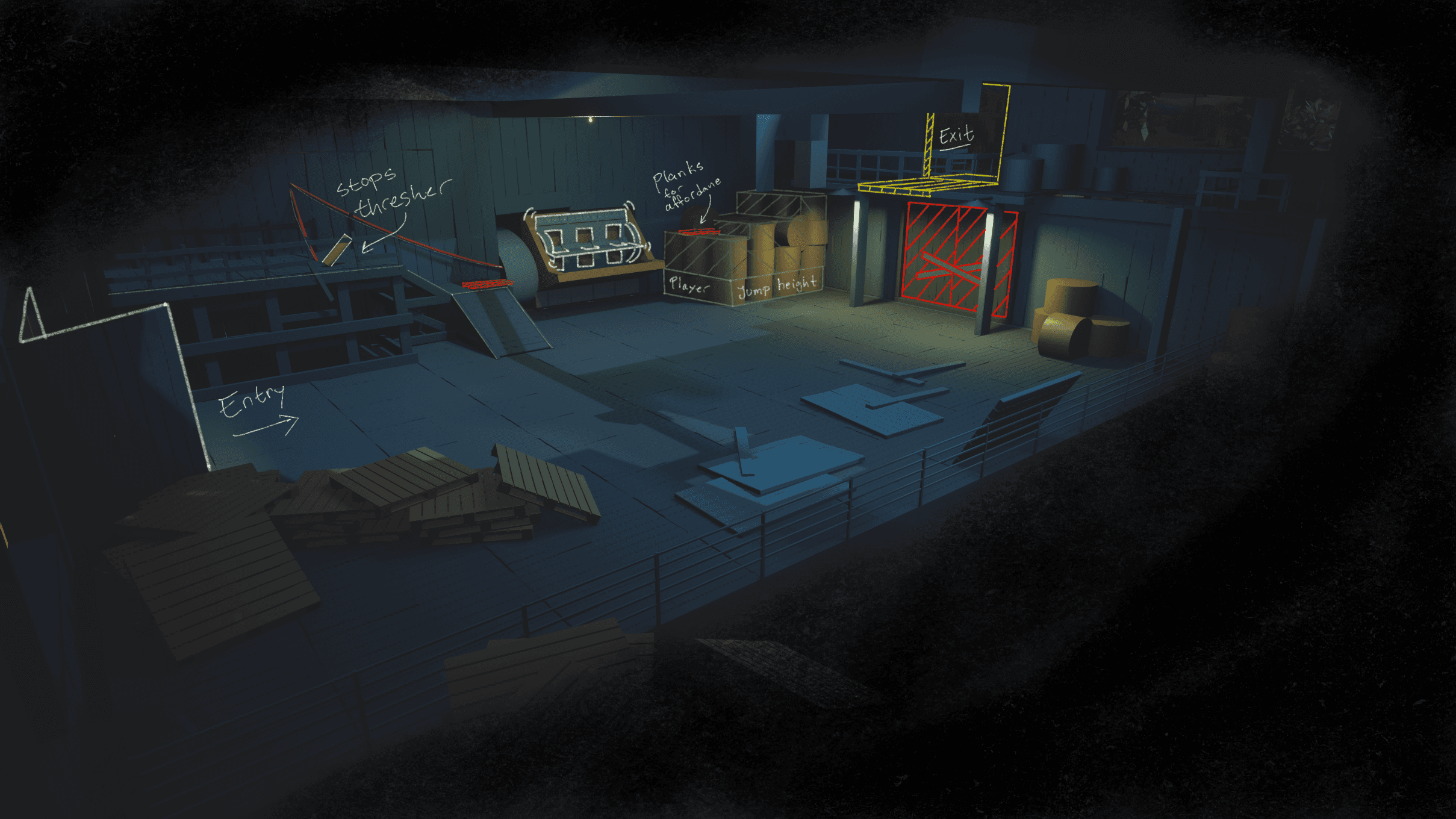
The Barn
The space is designed for immediate readability, showing both the blocked exit and the path forward on entry.
Here the thresher is the focal point, with a lever that clearly communicates cause and effect, when the blades creates a bridge to the hay bales.
The Tank
The Tank is placed directly after exiting the barn to shift the tone and introduce an atmosphere of destruction.
Its meaning is intentionally left open, but it serves as a grounded reference to real-world conflict, reinforcing the level's underlying theme.
Enemy Introduction
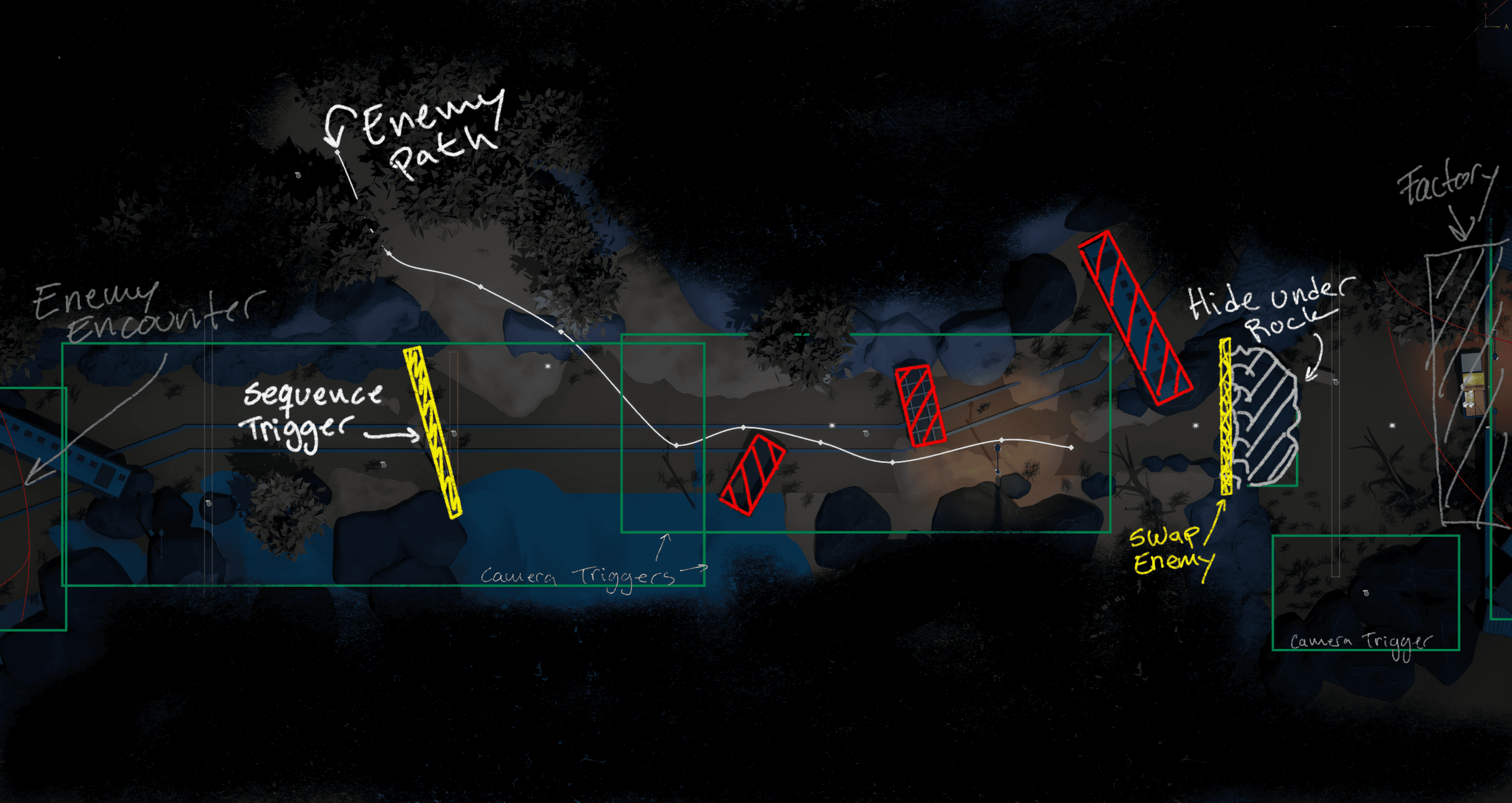
Enemy Encounter
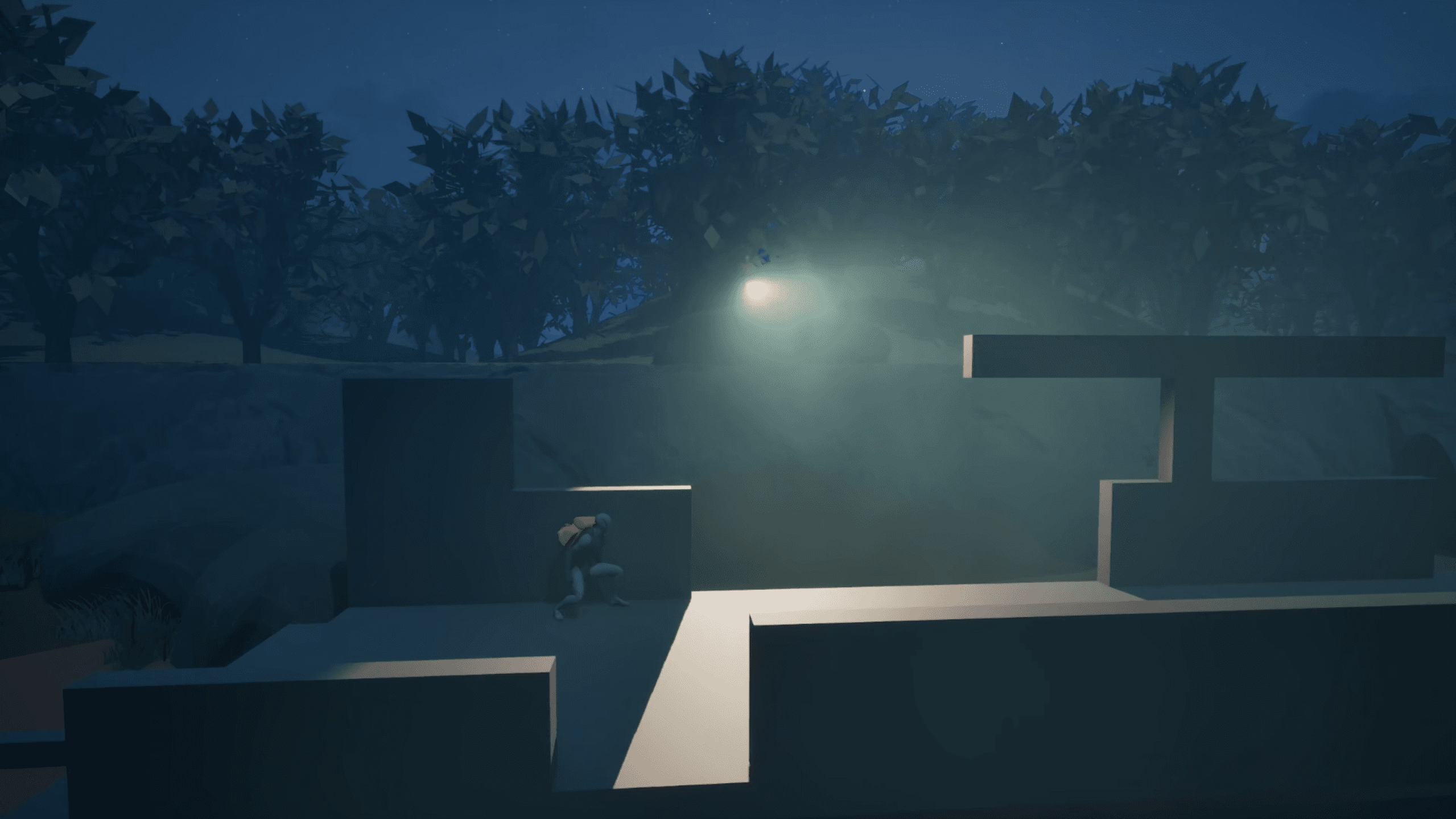
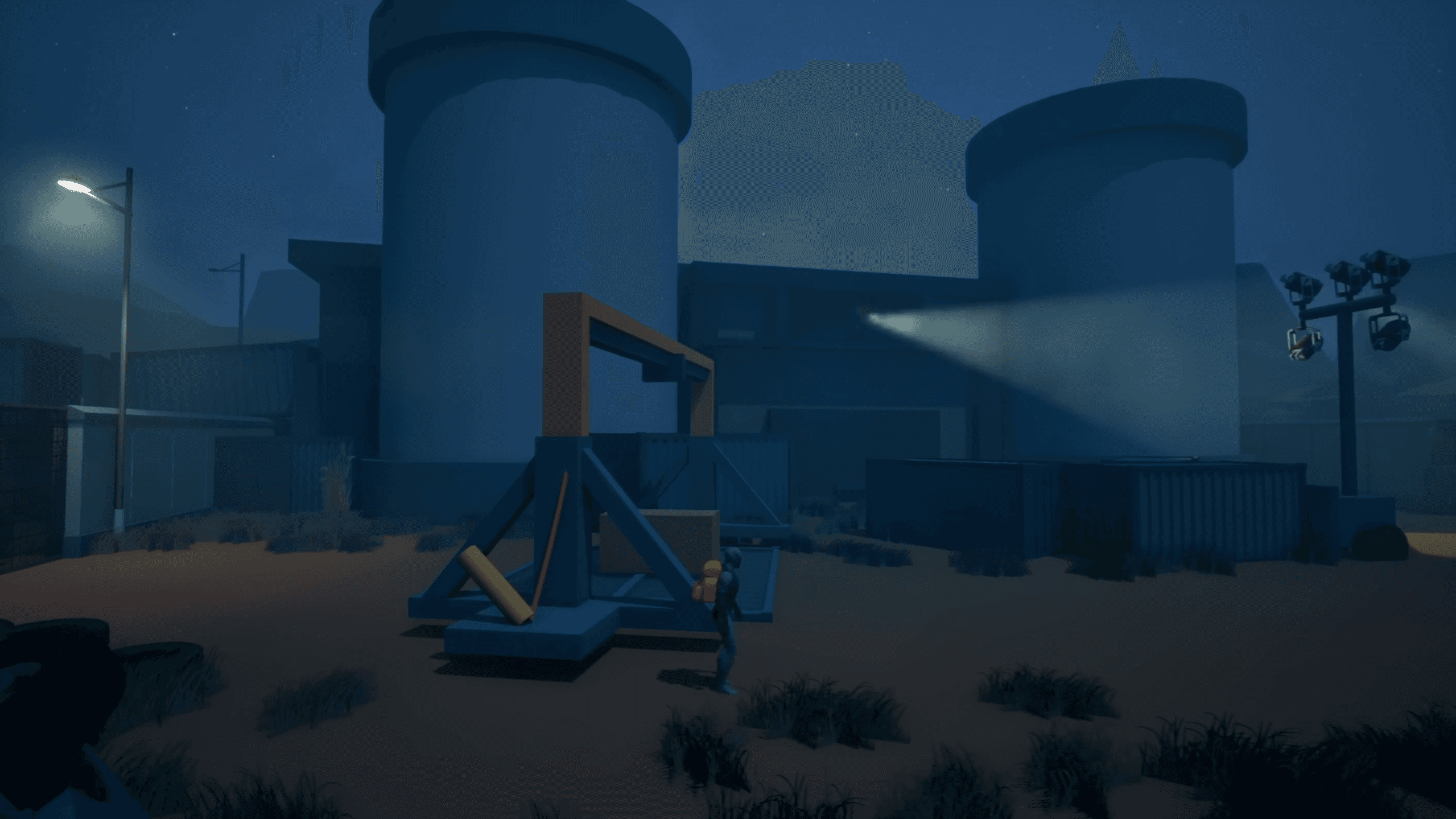
After introducing the enemy as a threat, I reinforced this by placing the enemy above the player, scanning down achieved a sense of helplessness.
The scanning of the flashlight stands out in the otherwise dim and static lights around the level.
Chase Sequence
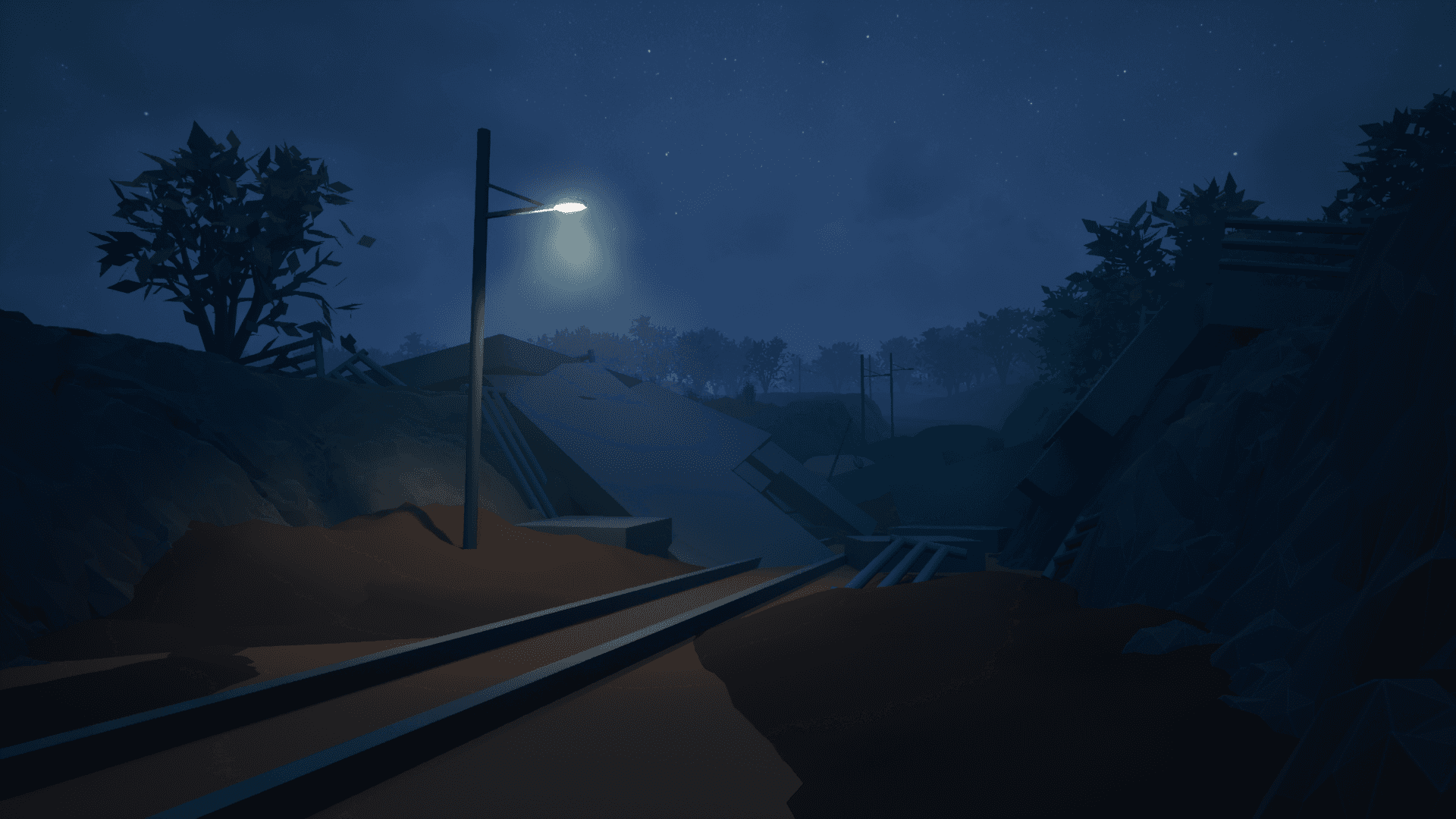
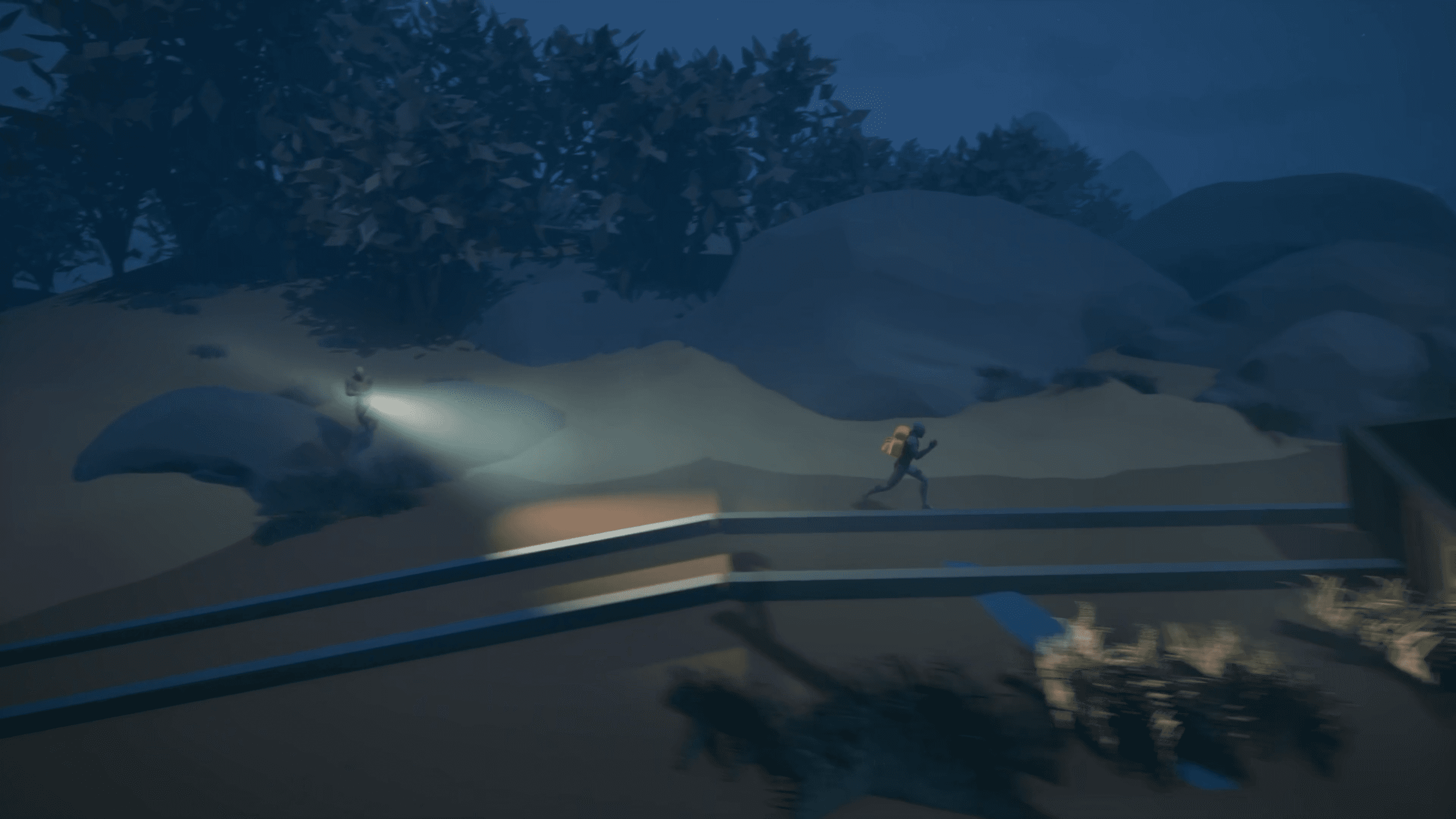
When the player clears the train-section of static enemies by crouching under a broken train cart, I wanted to create a sense of safety, only to then throw them a chase sequence.
The Chase done with the intent to contrast the slow and sneaky section with a high intensity finish.

The Factory
Forest
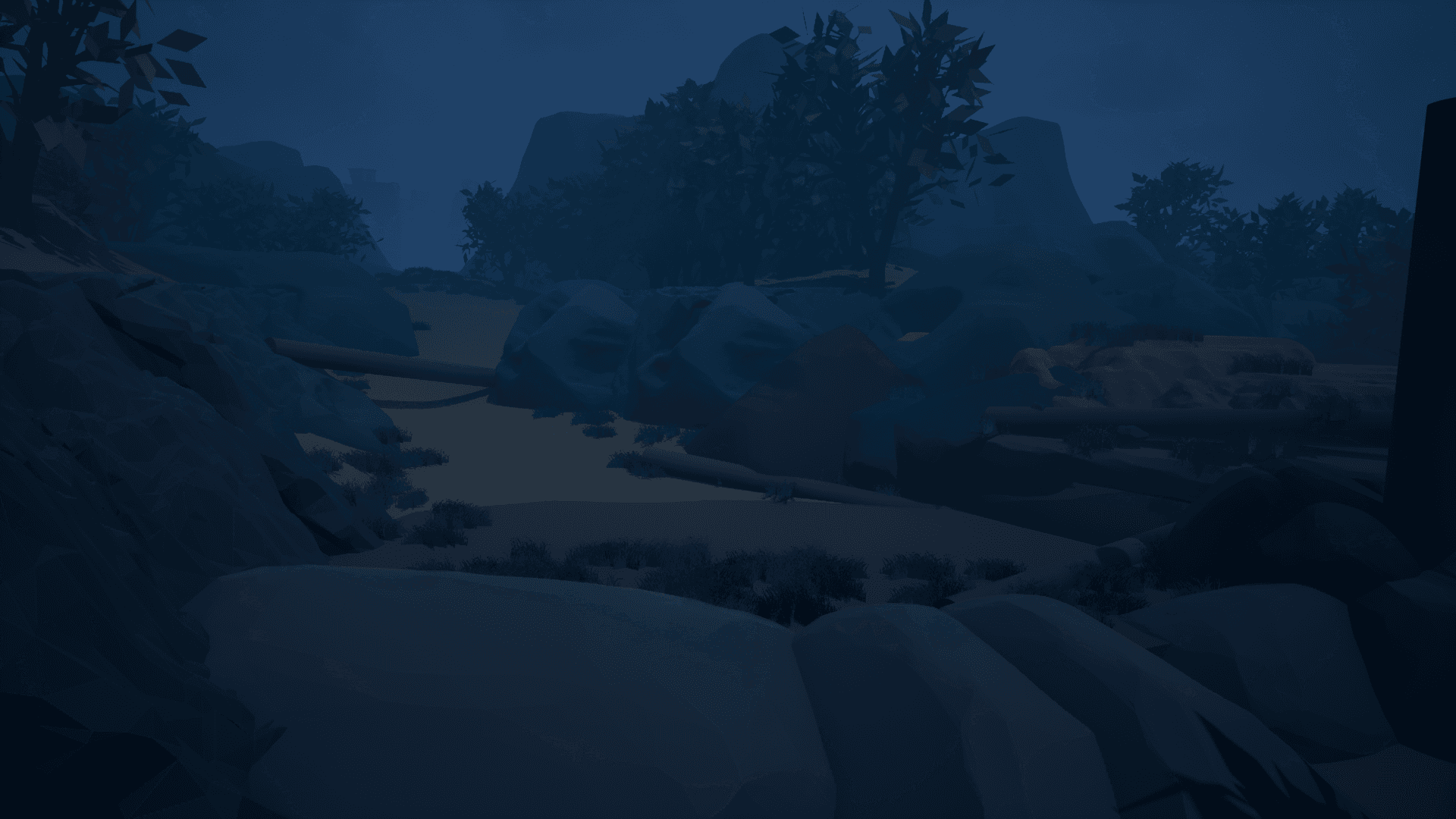
The forest's main purpose is to contrast the upcoming battlefield by slowing the pacing and putting the player into a brief state of calm.
It finishes with a crawl space that acts as a funnel into the next space. Two dead bodies serve as environmental storytelling and foreshadowing the chaos ahead.
Battlefield
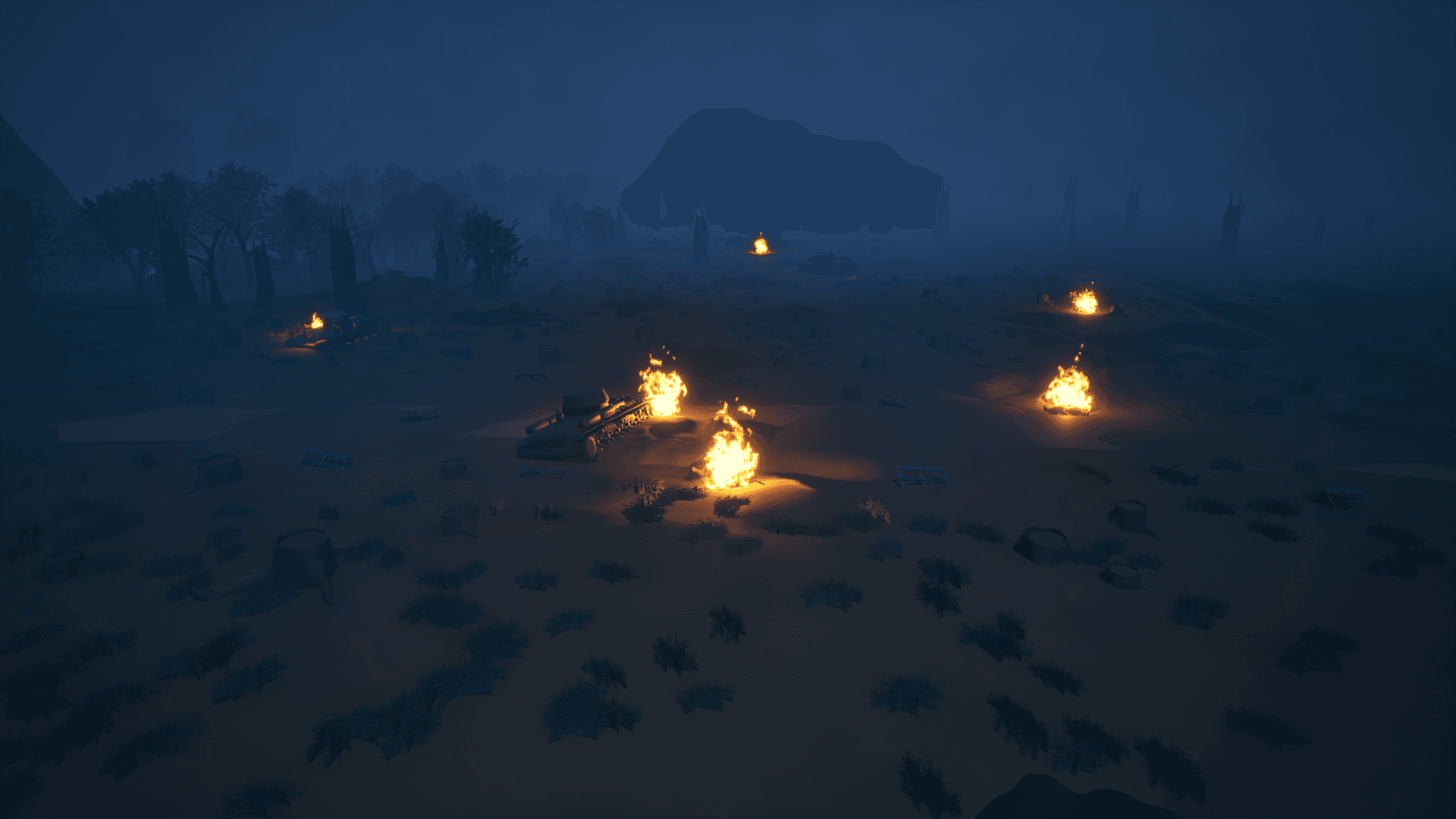
The Battlefield serves as a reveal of the world, shifting gameplay into a quiet traversal through destruction.
With no active combat, the player moves through a desolate space filled with burning bodies, disabled tanks, and shattered trees, while distant explosions reinforce the ongoing conflict.
Among the chaos stands a lone house with a small yard. Juxtaposed by the flattened terrain, it creates a clear focal point to guide the player forward.
Home
The level concludes with an open ending.
Inside the barn, the player encounters three bodies covered by a yellow tarp, immediately drawing focus. Yellow is consistently used in the level to highlight key elements, linking this moment to the established visual language.
Next to the tarp is an orange backpack, like the one the player is wearing, along with a rifle. I designed this to suggest a narrative connection while reinforcing the ambiguity.
Walking up to the bodies triggers the final sequence: a slow pan out of the barn followed by a flash of light from inside. Then overlooking a distant city in ruins and a lonely flickering light is seen from outside the barn.
The ending is ambiguous, leaving the interpretation to the player.
Production
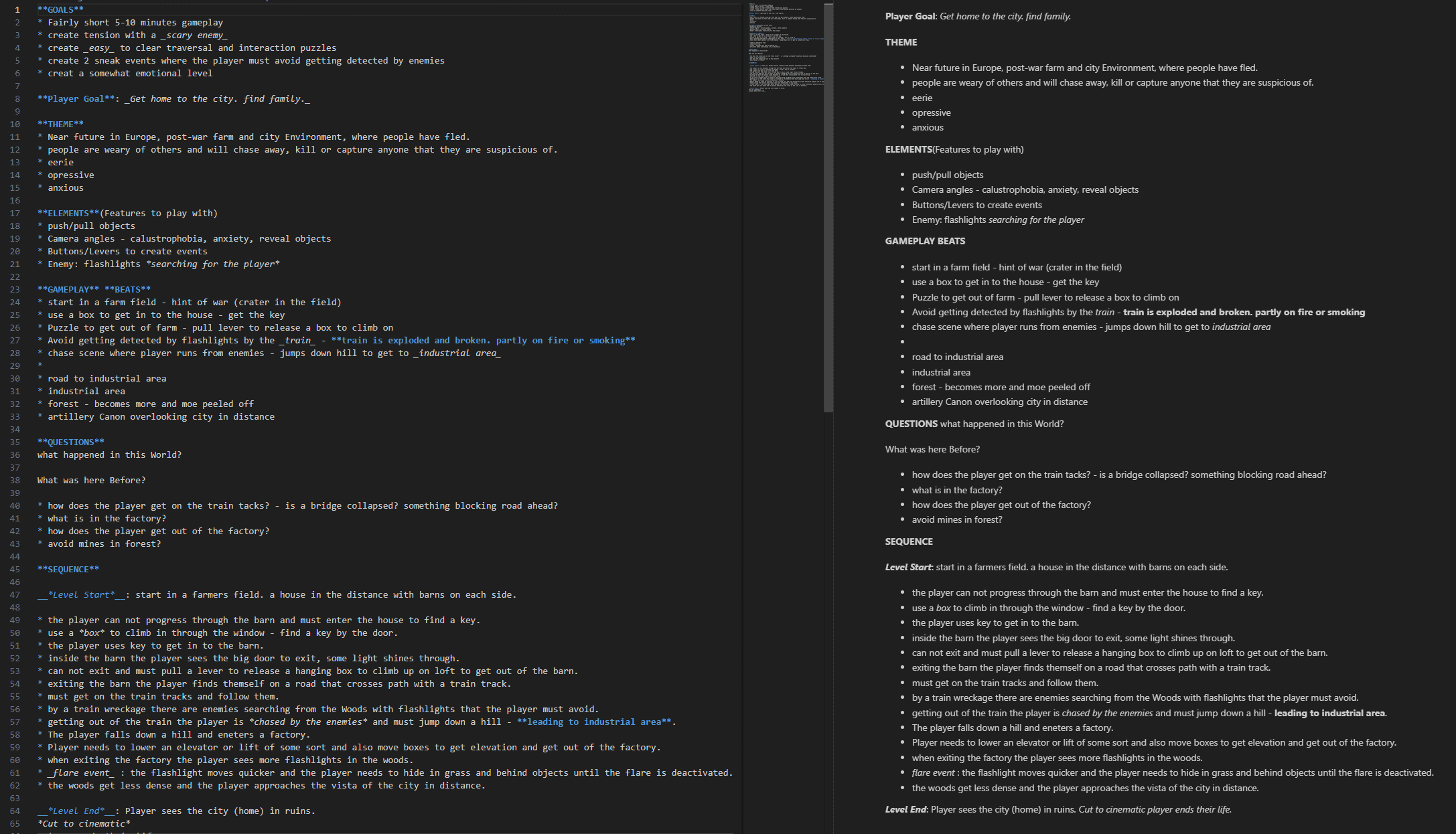
Plan Level
Paper Design
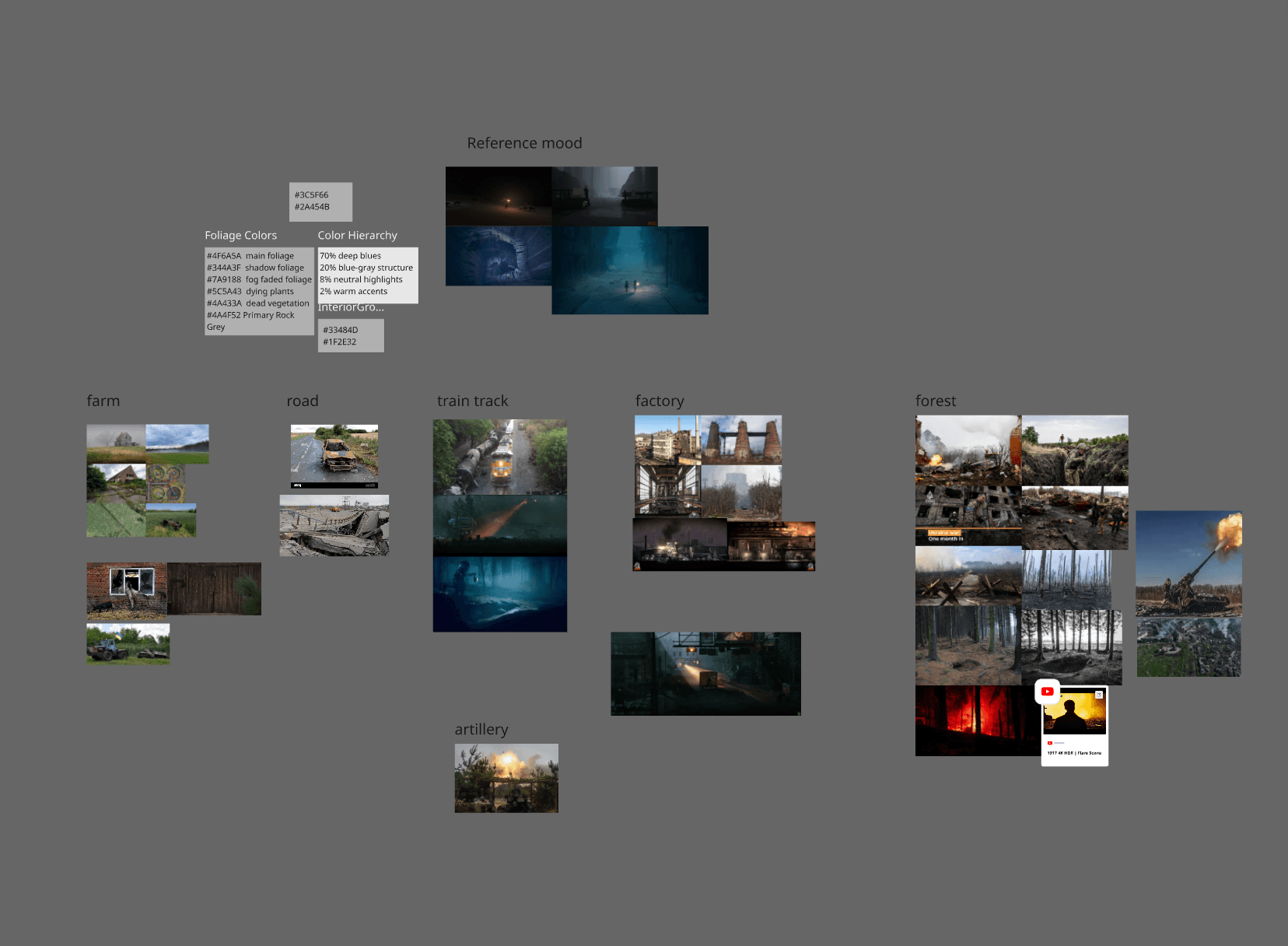
To stay within scope, I chose to map the level with a bubble diagram, placing spaces in a rough layout of the overall map. The camera's position was considered from the start, with the player view from the bottom of the page.
The layout helped me visualize the player flow instead of details.
My initial plan was two puzzles and two enemy encounters, with the final enemy encounter being in the forest. Due to scope, the forest encounter was scrapped in the blockout phase. Although it could have added a high intensity beat, it was not manageable within the timeframe.
Instead, I merged the second enemy encounter with the factory puzzle and kept the forest as a slow pacing beat leading into the battlefield.
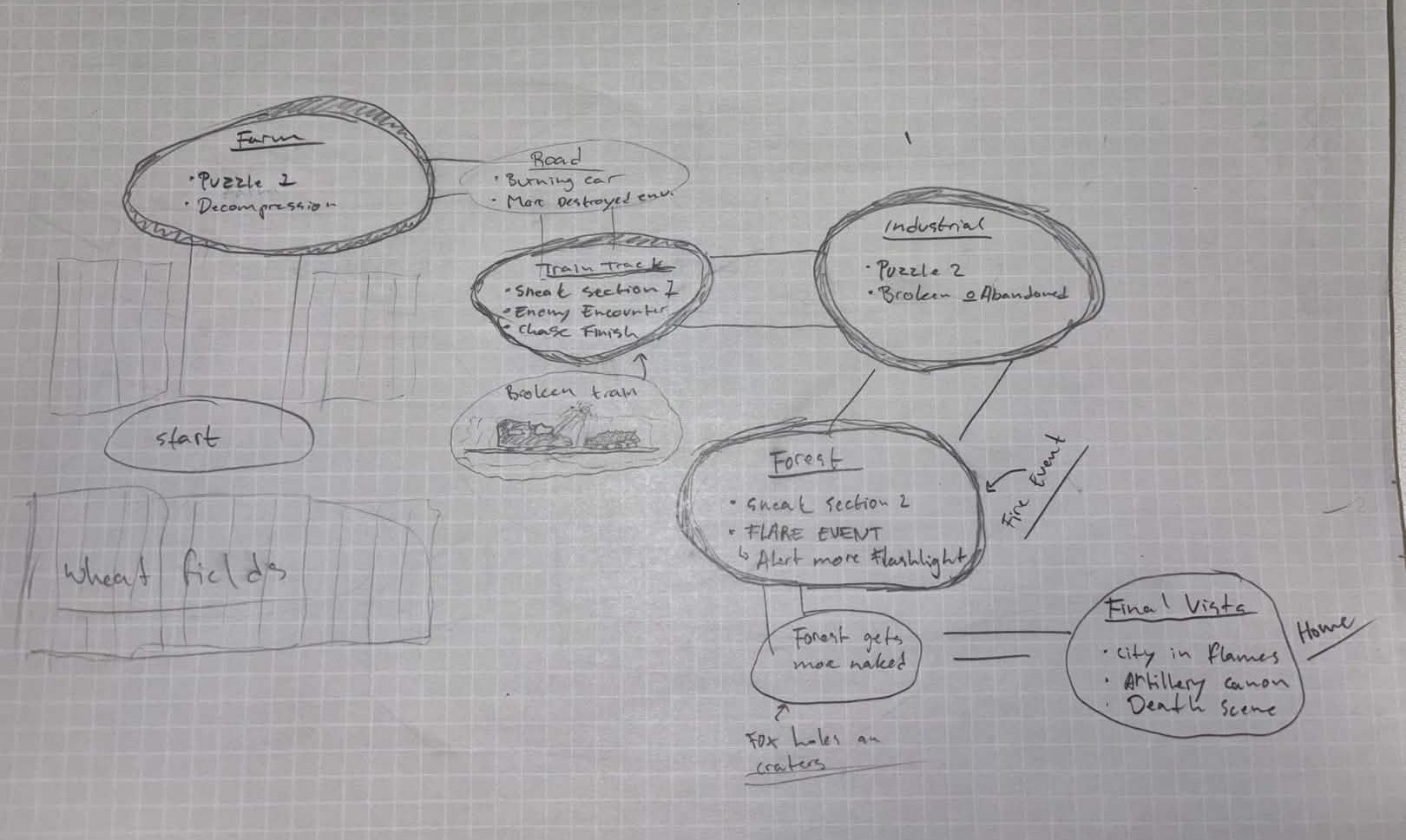
Prototyping
Living world
The spaces between gameplay beats lacked activity.
To adress this, I introduced movement and foreshadowing of upcoming events, making the world feel more alive while maintaining the eerie tone.
I used this approach throughout the level to create a cohesive, diegetic experience driven by visual storytelling.
Optimization
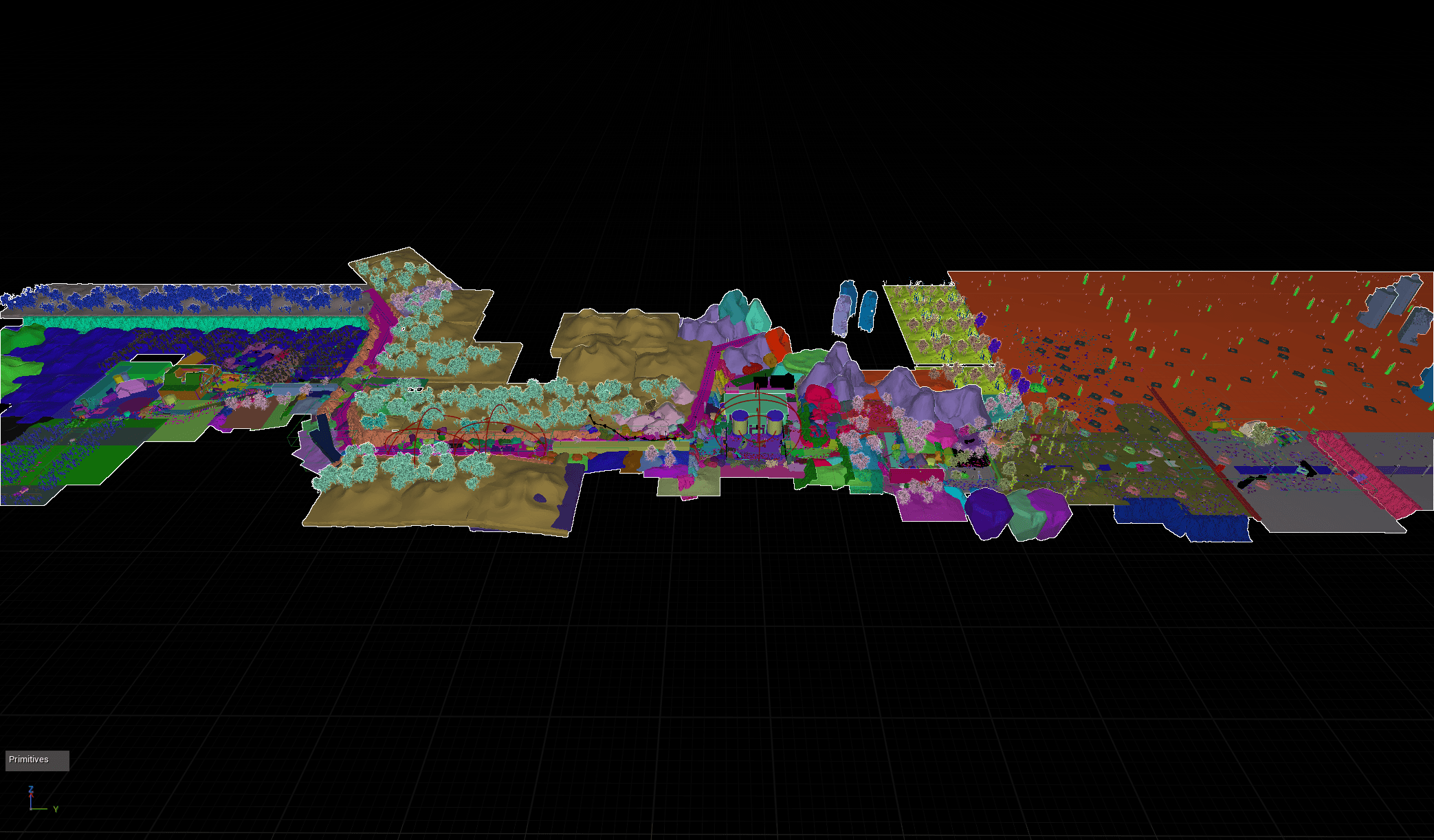
I build the whole level with meshes, including the landscape. This allowed me to iterate quickly while blocking out.
The problem was that as the number of meshes increase, performance began to drop. To address this, I converted large sections of the landscape into editable level intances, reducing the number of draw calls while maintaining flexibility.
I used the same approach for finished structures as the barn and factory, improving both my workflow and efficiency.
This allowed me to maintain performance while iterating on large-scale changes.
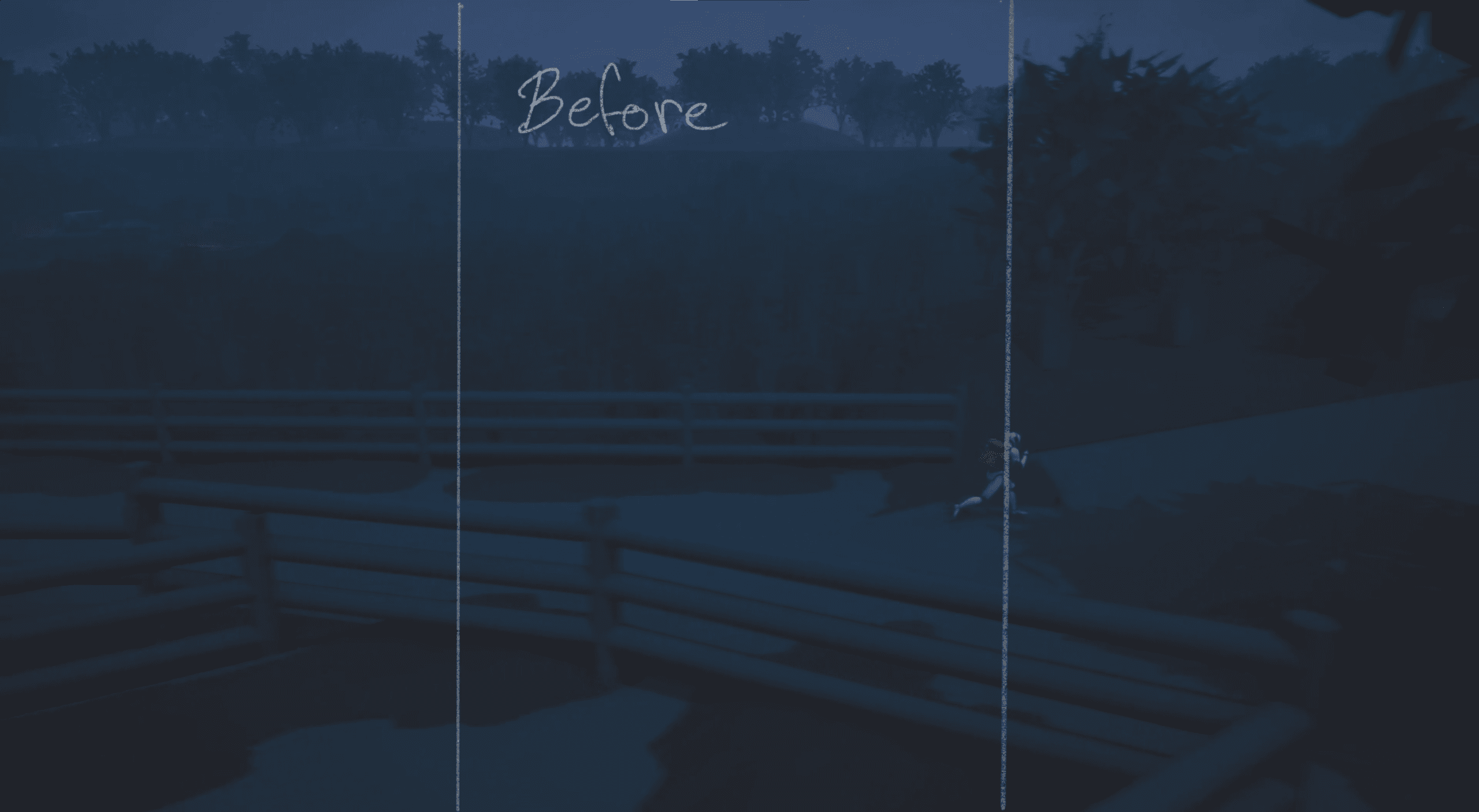
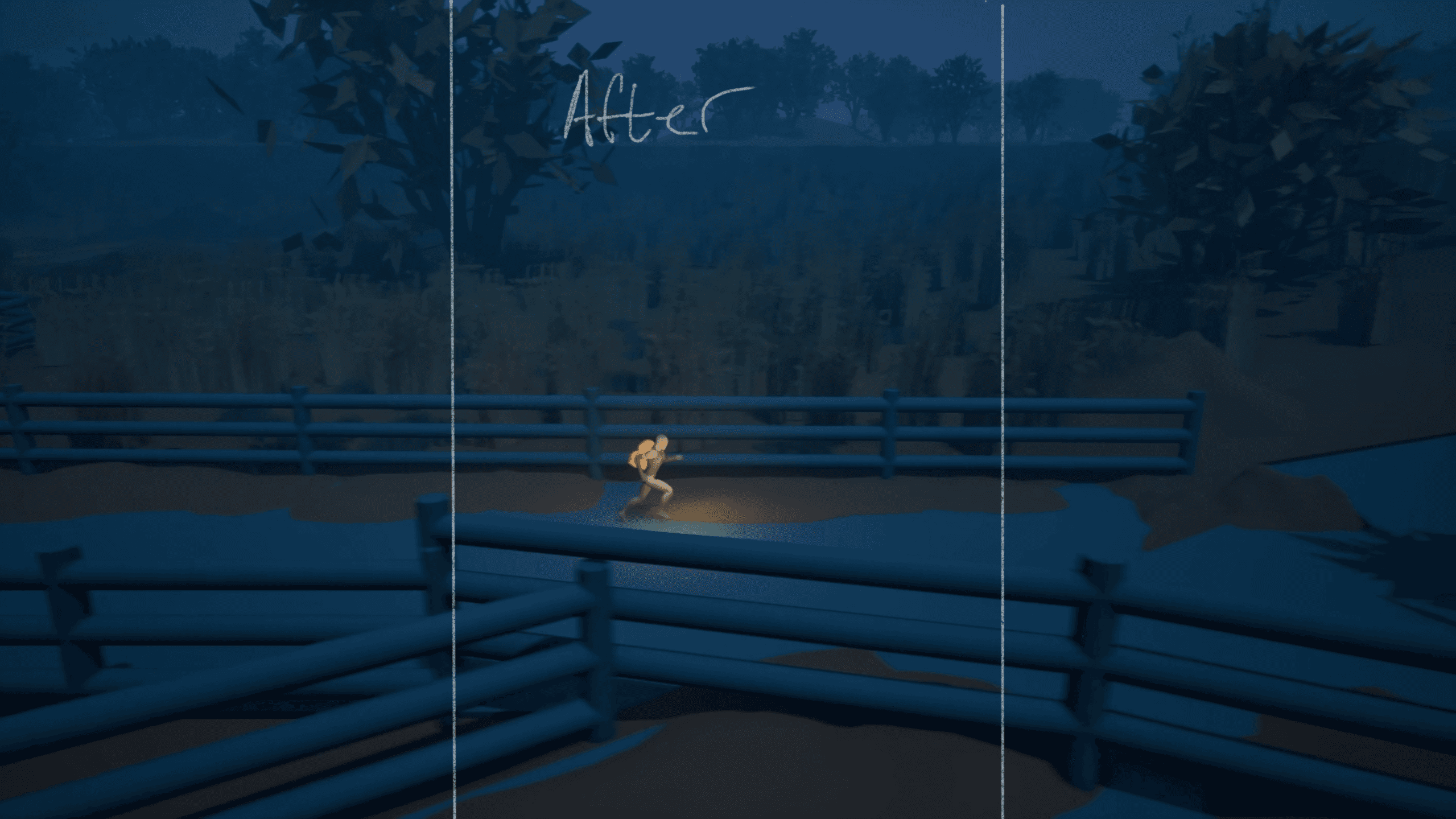
Player Camera Adjustments
Enemies
Spotlight Enemy
Chase Enemy
Puzzles
The Barn breakdown
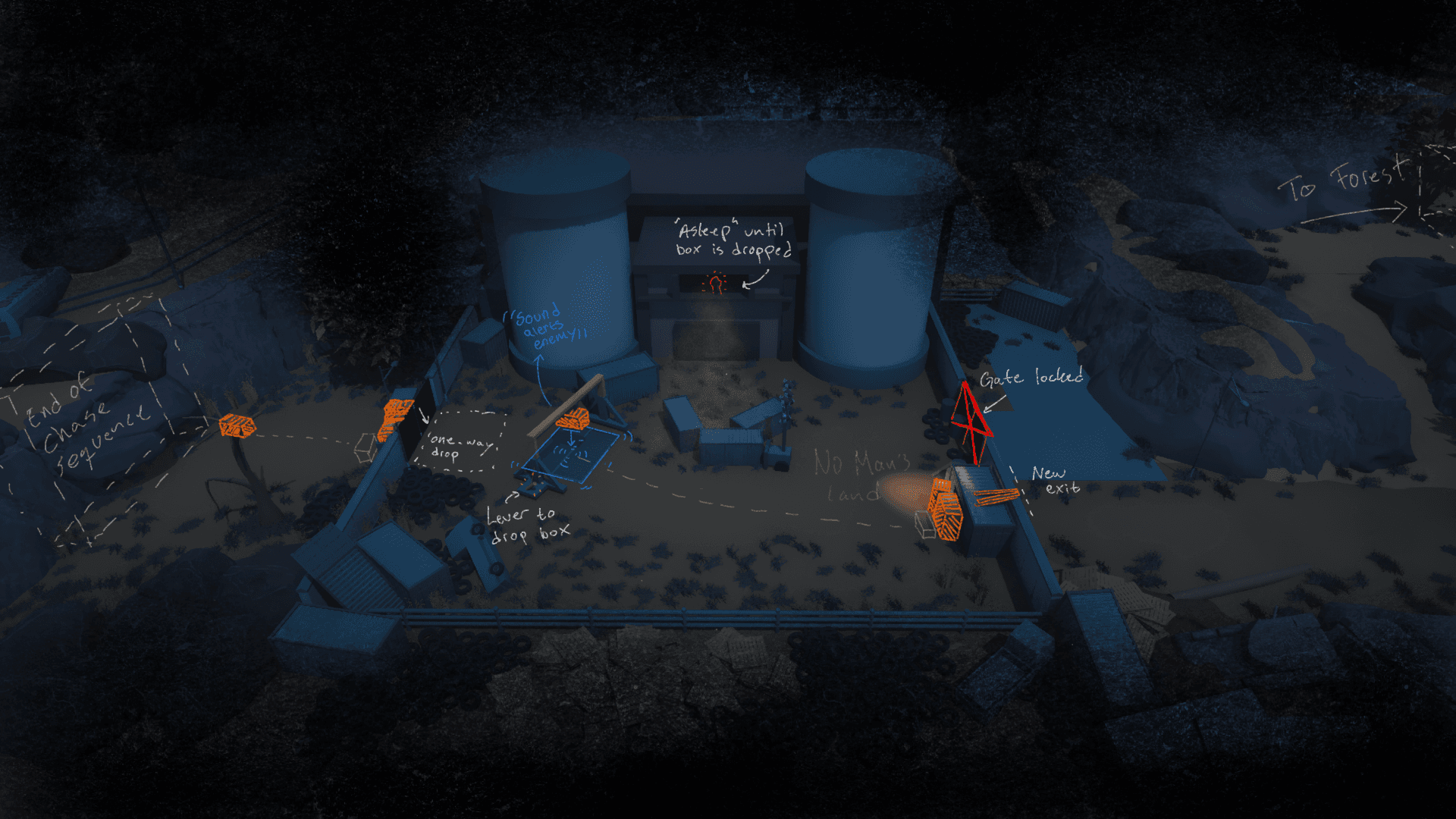

Factory Breakdown
Reflections
If I were to revisit the level, I would spend more time polishing the scale of objects to make it clear that the character is juvenile. An animation for the player's lighter would also be beneficial.
I would also try to incorporate more gameplay moments and make The Barn more engaging. Right now it is more of an obstacle than a traversal puzzle.
However, puzzles was not the main intention, the level is designed with focus on pacing, composition and readability.
As mentioned under "Paper Design", the level would benefit from a peak tension moment that introduces more enemy pressure in the forest before finally slowing down on the battlefield.
I believe this would have created a memorable final beat.
I'm drawn to narrative-driven experiences that evoke emotion, and this project was an exploration of that without dialogue, sound or NPC interactions.
Designing a purely visual experience that still creates emotional impact was challenging with the timeframe that I had, but it was a very rewarding process.